

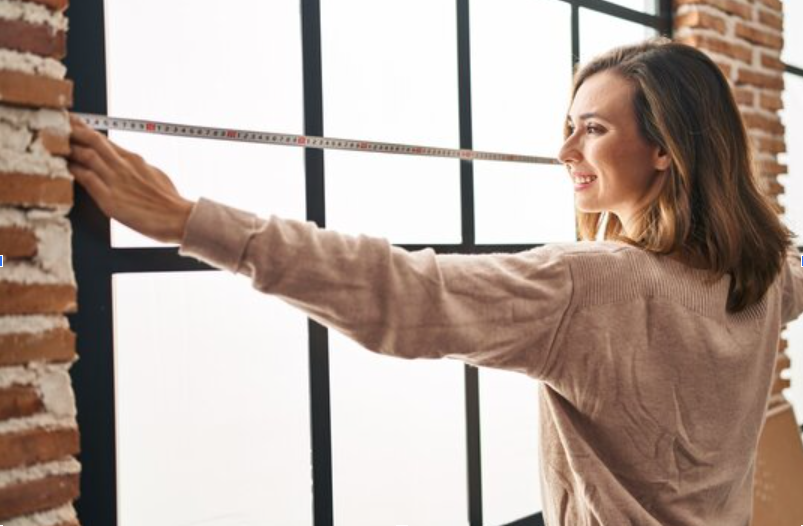
Measuring for blinds seems straightforward. You grab a tape measure, note the width and height, and place your order. Simple, right? Unfortunately, this is exactly where many homeowners make costly mistakes. Even a small measuring error can leave you with blinds that do not fit properly, let in unwanted light, or refuse to operate smoothly.
If you want your blinds to look polished and custom-made, accuracy is everything. Here are the biggest mistakes people make when measuring for blinds and how you can avoid them.
Not Choosing Inside or Outside Mount First
Before taking any measurements, you need to decide how the blinds will be mounted.
An inside mount fits within the window recess. It offers a clean, tailored appearance but requires precise measurements and enough depth inside the recess.
An outside mount is installed on the wall or frame outside the recess. It is often more forgiving and can make windows appear larger while blocking more light.
One of the most common mistakes is measuring without deciding on the mount type. The numbers for inside and outside mounts are completely different. Always determine your mounting style first, then measure accordingly.
Measuring Only Once
Many people measure quickly and assume the window is perfectly square. In reality, most window frames are slightly uneven.
You should always measure the width in three places: top, middle, and bottom. Then measure the height in three places: left, center, and right.
For inside mounts, use the smallest width measurement to ensure the blinds fit within the recess. For height, use the longest measurement. This approach accounts for minor variations and prevents fitting problems during installation.
Rounding Measurements Incorrectly
It may feel harmless to round numbers up or down, but precision matters when measuring for blinds.
Always record the exact measurement down to the nearest millimeter or eighth of an inch, depending on your measuring system. Even a slight adjustment can result in blinds that are too tight or leave visible gaps.
Check the supplier’s instructions before ordering. Some manufacturers automatically make small deductions for inside mounts. Guessing or adjusting measurements yourself can lead to disappointment when the blinds arrive.
Forgetting to Measure Depth
Depth is especially important for inside-mounted blinds.
Certain styles, such as wooden or faux wood blinds, require more recess depth to sit properly. If you do not measure the depth, you may end up with blinds that stick out awkwardly or cannot be fully recessed.
Measure from the window glass to the front edge of the recess. Compare this number to the minimum depth requirement listed by the manufacturer. Skipping this step is one of the most avoidable yet common errors.
Overlooking Handles and Obstructions
Window handles, cranks, locks, and even tiles can interfere with blind installation.
If your window has a protruding handle, measure from the furthest outward point. Otherwise, the blind may hit the obstruction when lowered.
This is particularly important when measuring for door blinds. For example, when installing intu blinds for french doors, you must carefully account for door handles and glazing bars to ensure the blinds sit neatly against the glass and operate smoothly. Ignoring these small details often results in blinds that cannot close properly.
Always examine the window or door area closely before finalizing your measurements.
Measuring the Frame Instead of the Recess
For inside mounts, your measurements should reflect the internal recess, not the outer frame.
A common mistake is measuring from edge to edge of the visible frame rather than the true inside opening. This often leads to blinds that are too wide.
Place the tape measure inside the recess and measure from one inner edge to the other. Keep the tape straight and level to ensure accuracy.
See also: The Best Pet‑Friendly Flooring Options
Assuming Identical Windows Are the Same Size
Even if two windows look identical, they may not be exactly the same size.
Never assume one measurement applies to all windows in the room. Builders often work with slight variations, and older homes especially may have subtle differences between openings.
Measure each window individually. Taking a few extra minutes can prevent ordering multiple blinds that do not fit.
Using the Wrong Measuring Tools
Using the wrong tools can lead to inaccurate readings.
A fabric tape measure can stretch or bend, resulting in incorrect numbers. Always use a sturdy metal tape measure that stays straight when extended.
Write down each measurement clearly and double-check before moving on. Staying organized reduces the risk of mixing up dimensions between windows.
Forgetting About Floor or Door Clearance
For full-length blinds or blinds installed on doors, clearance is crucial.
If blinds are too long, they may drag on the floor. If they are too short, they may look awkward and unfinished.
For doors, ensure there is enough space so the blinds do not interfere with opening and closing. Measure carefully from the top mounting point down to your desired stopping point.
Ignoring Product-Specific Instructions
Different blind styles have different measuring requirements. Roller blinds, Roman blinds, vertical blinds, and Venetian blinds all come with specific guidelines.
Before placing your order, carefully review the manufacturer’s measuring instructions. Some companies make automatic width adjustments, while others require exact measurements without deductions.
Failing to follow these directions is one of the quickest ways to end up with ill-fitting blinds.
Rushing Through the Process
The most common mistake of all is rushing.
Measuring for blinds requires patience and attention to detail. Take your time, measure carefully, and double-check everything before ordering.
Accurate measurements form the foundation of a successful installation. When done correctly, your blinds will fit perfectly, operate smoothly, and enhance the overall look of your space.
Final Thoughts
Getting the right fit for your blinds starts with careful measuring. By avoiding these common mistakes and paying close attention to detail, you can ensure a professional finish without unnecessary frustration.
Measure more than once, follow the manufacturer’s instructions, and account for every detail around the window or door. With the right approach, your blinds will not only fit perfectly but also elevate the comfort and style of your home.

 Refining Everyday Style with Compact Luxury