

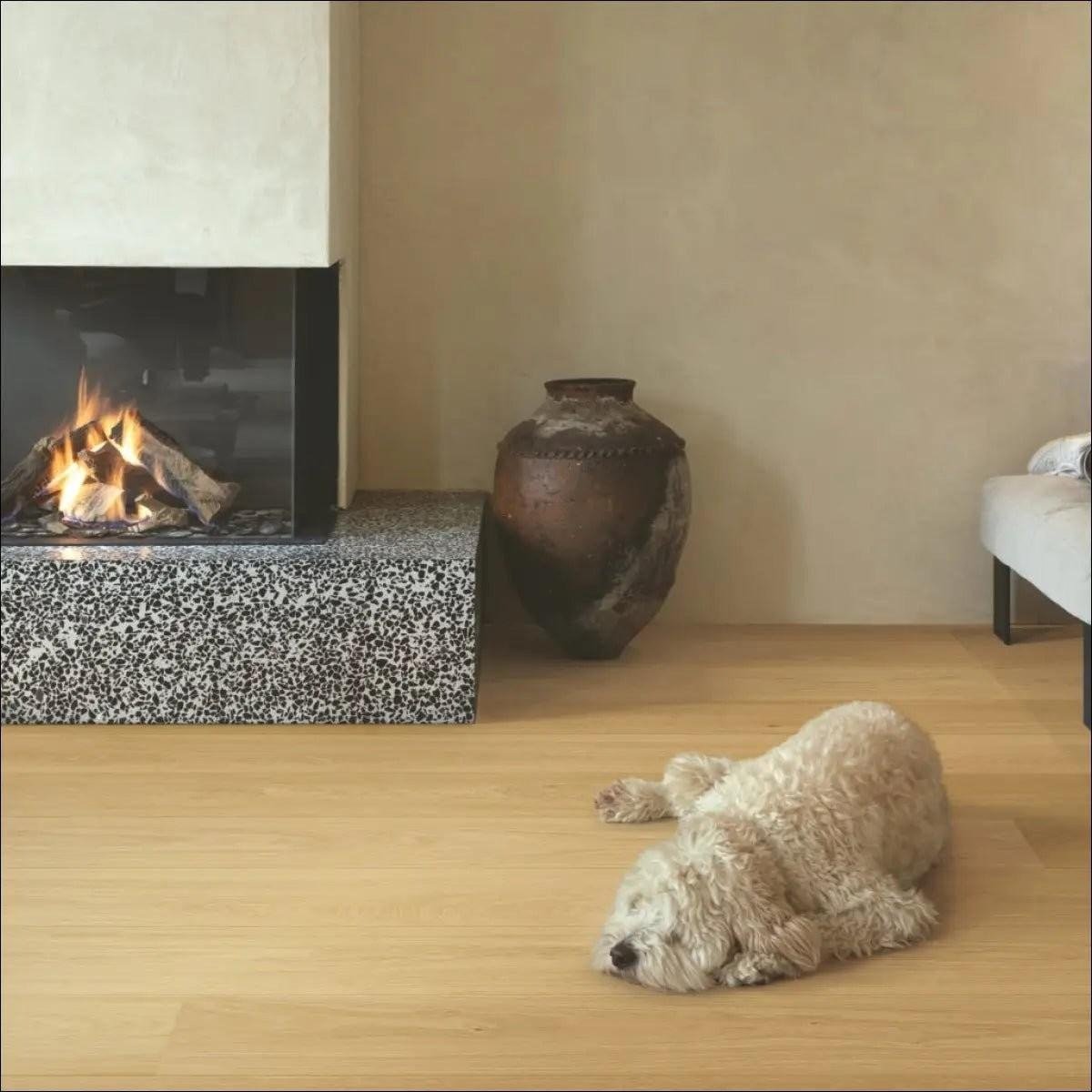
Pets bring joy, companionship, and a lot of personality into a home, but they also bring claws, muddy paws, the occasional accident, and plenty of wear and tear. That’s why choosing the right flooring is essential for any pet‑owning household. The right floor will stand up to daily challenges, stay looking great, and make life easier for both you and your furry friends.
This guide by Floor Land breaks down what pets really need from flooring, the best options available, how they compare on scratch resistance, and the cleaning habits that keep everything in top condition.
What Pets Need from Flooring
Before diving into specific flooring types, it’s helpful to understand the key performance factors that matter most in a pet‑friendly home.
1. Scratch Resistance
Dogs and cats can unintentionally scratch floors with their claws — especially larger breeds or energetic pets. Floors with a tough wear layer or a hard surface are essential to prevent visible damage.
2. Water Resistance
Accidents happen. Spills happen. Wet paws happen. Flooring that can handle moisture without swelling, staining, or warping is a must.
3. Comfort Underfoot
Pets spend a lot of time lying on the floor. A surface that’s not too cold or too hard helps keep them comfortable.
4. Traction
Some floors can be slippery for pets, especially older dogs. A textured surface helps them feel secure and prevents sliding.
5. Easy Cleaning
Pet hair, muddy pawprints, and the occasional mishap are part of daily life. Flooring that’s easy to wipe, sweep, or mop saves time and stress.
See also: How to Choose the Best Free PDF Editor Online Without Regrets
Best Options
When it comes to pet‑friendly flooring, three options consistently stand out: luxury vinyl tile (LVT), laminate, and engineered wood. Each offers a different balance of durability, style, and practicality.
LVT is widely considered the gold standard for pet‑friendly homes — and for good reason.
Why it works well:
• Highly scratch‑resistant
• Fully waterproof
• Warm and comfortable underfoot
• Quiet, reducing the sound of claws
• Available in realistic wood and stone designs
• Easy to clean and maintain
LVT’s waterproof nature makes it ideal for kitchens, hallways, and living rooms where pets spend most of their time. SPC (stone‑plastic composite) versions are even more durable, offering exceptional dent resistance.
Best for:
Homes with multiple pets, puppies, or older animals prone to accidents.
Laminate Flooring
Modern laminate flooring has come a long way. With tough AC‑rated wear layers and realistic textures, it’s a strong contender for pet‑friendly households.
Why it works well:
• Excellent scratch resistance
• Affordable compared to wood
• Realistic wood appearance
• Easy to clean
• Good for high‑traffic areas
However, laminate is not fully waterproof. Many ranges are water‑resistant but standing moisture can still cause swelling. Using a robus
underlay and cleaning spills promptly helps protect the floor.
Best for:
Active pets and busy homes where scratch resistance is a priority.
Engineered Wood
Engineered wood offers the beauty of real timber with improved stability — but it’s not as pet‑proof as LVT or laminate.
Why it works well:
• Authentic wood appearance
• More stable than solid wood
• Can be refinished (depending on wear layer thickness)
• Warmer and more comfortable than laminate
However, engineered wood is more vulnerable to scratches and moisture. Choosing a textured, matte, or brushed finish helps disguise marks, and selecting a harder wood species (like oak) improves durability.
Best for:
Homes where style is a priority and pets are calm, older, or well‑trained.
Scratch Resistance Comparison
When it comes to pets, scratch resistance is one of the biggest deciding factors in choosing the right flooring. Each flooring type performs differently, and understanding these differences helps homeowners make a confident, long‑lasting choice.
LVT (Luxury Vinyl Tile) offers the highest level of scratch resistance. Its tough wear layer is specifically engineered to withstand claws, toys, and high‑energy pets racing around the house. Even in busy homes with multiple animals, LVT rarely shows visible marks, making it the most reliable option for durability.
Laminate flooring comes a close second. High‑quality laminates — especially those rated AC4 or AC5 — are designed for heavy domestic use and hold up extremely well against scratching. While laminate is very resilient, it can occasionally chip if something sharp hits it at the wrong angle. Still, for most pet owners, laminate provides excellent day‑to‑day protection.
Engineered wood is the most vulnerable of the three. Because it’s made with a real wood top layer, it can show scratches more easily, especially in smooth or glossy finishes. That said, not all engineered wood performs the same. Harder species like oak, combined with textured, brushed, or matte finishes, can disguise marks effectively. And unlike synthetic floors, engineered wood can sometimes be refinished depending on the thickness of the wear layer.
In simple terms:
• LVT is the most scratch‑resistant and the safest choice for active pets.
• Laminate offers strong protection at a great price point.
• Engineered wood provides natural beauty but requires more care and the right finish to stay looking its best.
Cleaning Tips for Pet Owners
Even the most durable flooring benefits from proper care. These simple habits keep your floors looking great and extend their lifespan.
1. Sweep or Vacuum Regularly
Pet hair and grit can act like sandpaper over time. A quick daily sweep or vacuum prevents micro‑scratches and keeps floors looking fresh.
2. Use Mats at Entrances
A mat by the front and back doors catches mud, moisture, and debris before it reaches your flooring. For dogs, a washable runner in hallways works wonders.
3. Wipe Up Spills Immediately
Even waterproof floors benefit from quick cleaning. For laminate or engineered wood, this is essential to prevent swelling or staining.
4. Trim Your Pet’s Nails
Shorter nails mean fewer scratches. Regular grooming is one of the easiest ways to protect your floors.
5. Use Pet‑Safe Cleaning Products
Avoid harsh chemicals that can damage flooring finishes. Most LVT and laminate floors only need a mild cleaner and warm water.
6. Add Rugs in High‑Traffic Areas
Rugs protect flooring and give pets a comfortable place to rest. Choose ones with non‑slip backing to prevent sliding.
7. Consider Underfloor Heating
Pets love warm floors, and underfloor heating works brilliantly with LVT and engineered wood. Just make sure the flooring is rated for UFH.
Final Thoughts
Choosing pet‑friendly flooring doesn’t mean compromising on style. Today’s LVT, laminate, and engineered wood options offer stunning designs with the durability needed for busy homes.
If you want maximum resilience and peace of mind, LVT is the clear winner. Laminate offers fantastic scratch resistance at a great price, while engineered wood brings natural beauty to homes with calmer pets.
Authored by Lee McCarthy.
Floor Land
Cockhedge Shopping Centre
Warrington
Cheshire
United Kingdom
WA1 2QQ
sales@floor-land.co.uk



 Comme des Garçons: The Revolutionary Fashion House That Redefined Style